
Odd Lots
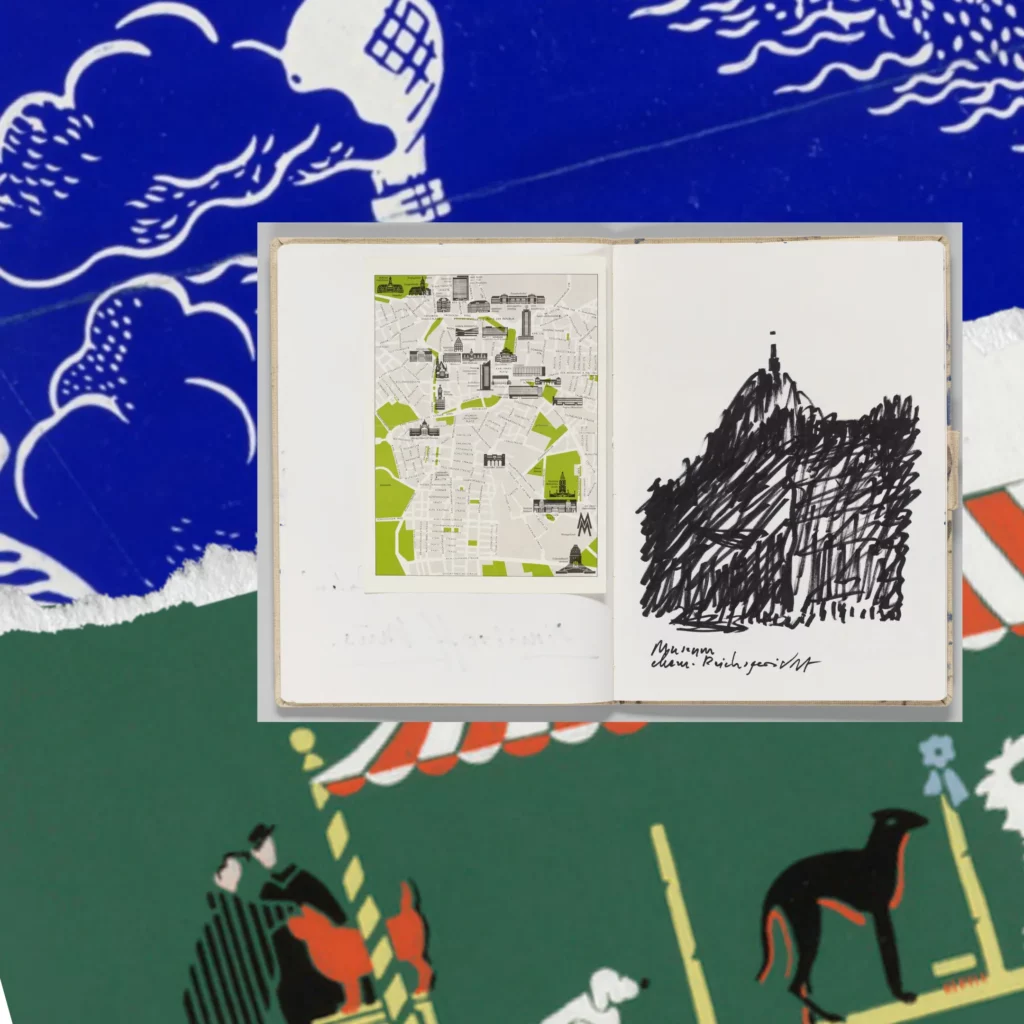
Location
We’ll meet with Guillermo Ruiz and Jessica Kwok, and Ryanaustin Dennis at Storefront for Art & Architecture , at 97 Kenmare St (at Lafayette), at 4pm!
Agenda
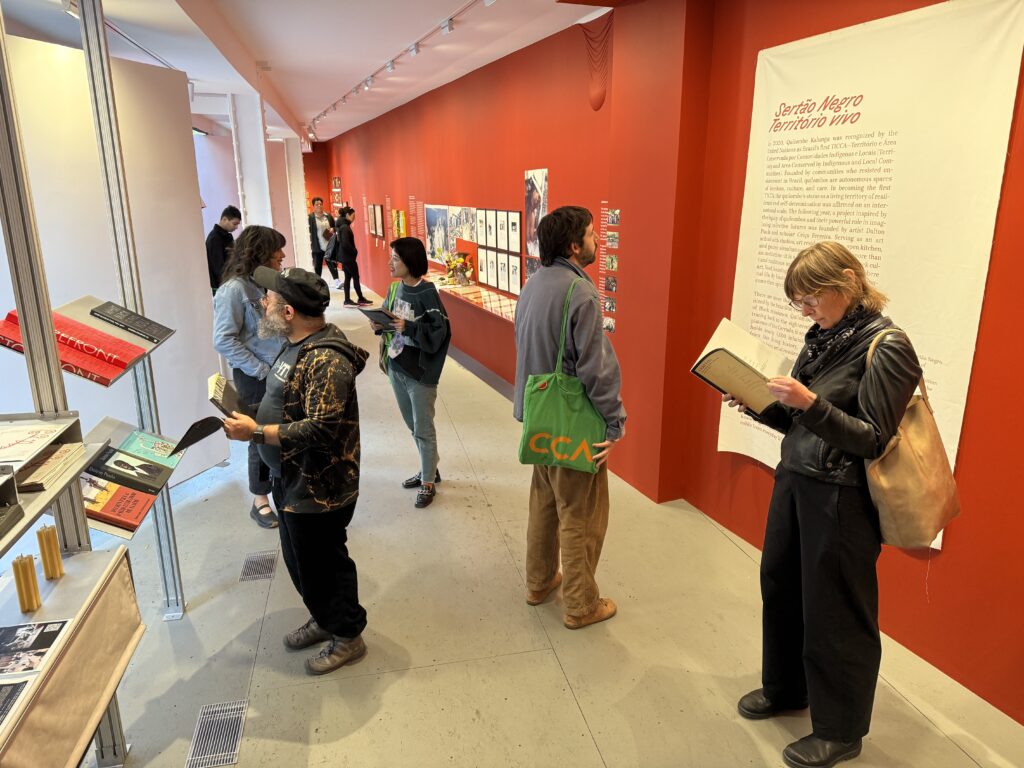
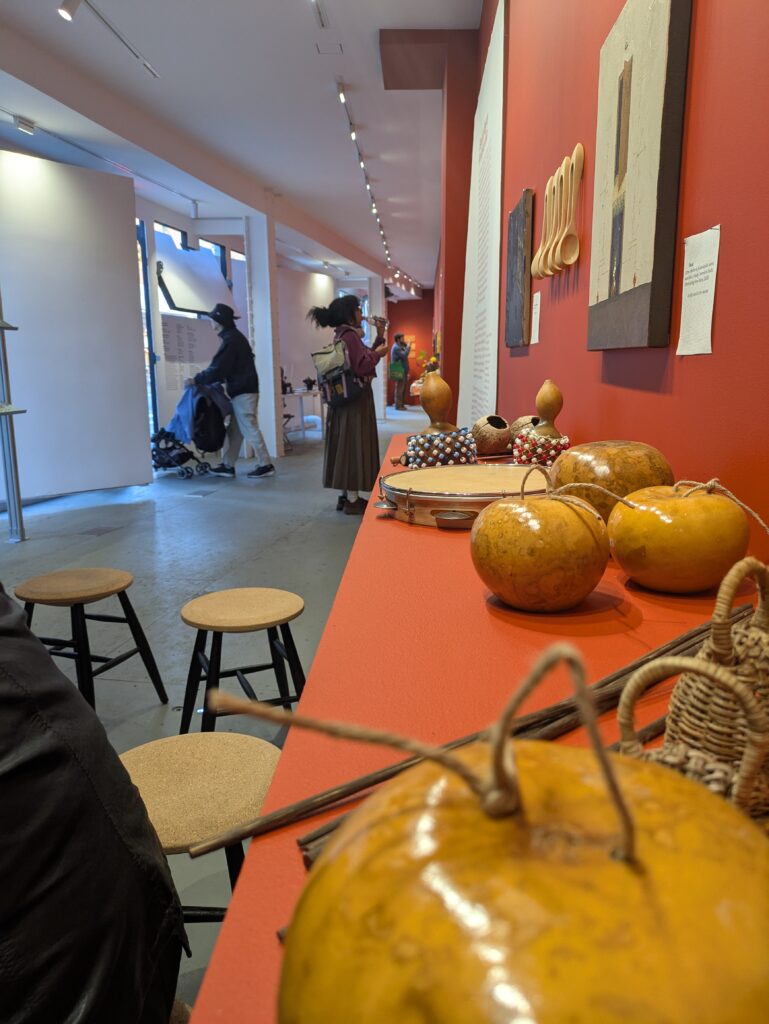
This week we’ll think about misfit spaces, odd lots, and deviant plots — and we’ll consider how they have been and could be used as sites to foster knowledge creation and sharing. With Storefront’s curators, we’ll explore their new exhibition, Território Vivo, which examines “holistic school(s) rooted in Black cultural traditions and the spirit of the quilombo, where art, food, housing, and land are the grounds for communal life” — learning communities whose work could inform our own. In addition, we’ll consider Storefront’s legacy as a misfit institution and the archive documenting its work over the past four decades+. We’ll also imagine how such spatial strategies might apply to our own institutions and practices: how can we index the city’s anomalous plots, commandeer cubbies as reading nooks, appropriate under-stair lairs and crawl spaces for fugitive libraries or pop-up exhibitions, etc? What are the spatial qualities of the “undercommons” or the “loophole”?
Looking Ahead
The “Lotty Rosenfeld: Disobedient Spaces” exhibition, opening November 7 at Columbia’s Wallach Art Gallery, promises to illuminate many of our central interests!
To Prepare for Today
- Read about Storefront’s history in Eric Lawner, “Size Matters: A Conversation on Storefront for Art and Architecture’s History with Founder Kyong Park,” Archinect (October 23, 2019) and about the gallery’s current “Território Vivo by Sertão Negro” exhibition.
- Optional: Given our focus on libraries and archives, you might like to learn about Storefront’s archivally-oriented 40th anniversary exhibition by reading Samuel Medina, “Storefront for Art & Architecture Celebrates its 40th Anniversary with an Archival, Retrospective Exhibition,” The Architect’s Newspaper (October 3, 2022), and browsing through some of those archival materials on the Internet Archive — and in this Google Arts & Culture exhibition.
- Storefront sits on a unique triangular lot. What other odd lots and misfit spaces could we co-opt for knowledge-creation and sharing? Let’s start by considering Gordon Matta-Clark’s germinal Fake Estates project, developed through the 1970s and revisited in 2005 in “Odd Lots: Revisiting Gordon Matta-Clark’s Fake Estates,” a two-part Queens Museum / White Columns exhibition. Now, watch Sina Najafi talk about “Odd Lots” at the Modern Art Museum of Fort Worth (2015) [[video: 1:17]]. I’ve included a scan of the catalog, which is a bit hard to read, in the supplemental resources below (thanks to Frances Richard and Jeffrey Kastner!).
- Among the countless projects inspired by Matta-Clark is the now-dormant 596 Acres. See also Alexa Hoyer’s “In Absentia,” Urban Omnibus (February 7, 2024); Hoyer’s Fallow Frames bloomed into a 2024 Biennial across Ridgewood.
- Could some of these liminal spaces support a library or archive? Read (or skim!) Shannon Mattern, “Little Libraries in the Urban Margins,” Places Journal (May 2012).
- Now let’s think about how racial politics (and other social, cultural, and political-economic variables) might inform how communities define, and make use of, a “plot” of land. Read Alissa Ujie Diamond’s review of J. T. Roane’s Dark Agoras: Insurgent Black Social Life and the Politics of Place, in the Journal of Architectural Education(December 13, 2024); you’re welcome to track down and read the book on your own time, if you like.
- And if you have time, you might also be interested in Shannon Mattern, “Fugitive Libraries,” Places Journal (October, 2019).
- Finally, consider what we could do with other nooks, under-stair lairs, crawl spaces, and similar misfit realms: Read the abstract of Brian W. Sturm’s “Imaginary ‘Geographies’ of Childhood: School Library Media Centers as Secret Spaces,” Knowledge Quest 36:4 (2008): 46-9.
Fieldwork Documentation
Supplemental Resources
- Mimi Zieger, “Interventionists’ Toolkit” Series Places Journal (2011).
- Susan Blackaby and Jamie Hogan, Nest, Nook & Cranny (Charlesbridge, 2010).
- Christopher Brown, A Natural History of Empty Lots: Field Notes from Urban Edgelands, Back Alleys, and Other Wild Places (Hachette, 2024).
- Teresa Cremin, “Reading Places” in Teresa Cremin, Helen Hendry, Lucy Rodriguez Leon, Natalia Kucirkova, eds., Reading Teachers (Routledge, 2022).
- Nicholas de Monchaux, Local Code: 3,659 Proposals About Data, Design & the Nature of Cities (Princeton Architecture Press, 2016).
- Fake Industries Architectural Agonism, “Rooms: No Vacancy,” MoMA PS1 Young Architects Program International (2014).
- Larry R. Ford, The Spaces Between Buildings (MIT Press, 2000).
- Jarrett Fuller, “José Esparza Chong Cuy,” Scratching the Surface 249 (March 27, 2024) [[podcast: 45:38]].
- Jody Graf, “Life Between Buildings,” PS1 (June 2022 - January 2023).
- Harriet Jacobs, “The Loophole of Retreat,” Incidents in the Life of a Slave Girl (1861) — and about the book.
- Jeffrey Kastner, Sina Najafi, and Frances Richard, eds., Odd Lots: Revisiting Gordon Matta-Clark’s Fake Estates(Cabinet Books, 2005) [you have access to our shared Google Drive via the email with which you registered for our class!].
- Rem Koolhaas, “Junkspace,” October 100 (Spring 2002); reprinted in ReadingDesign; Rem Koolhaas and Hal Foster, Junkspace / Running Room (Notting Hill Editions, 2016).
- “Odd Lots: Revisiting Gordon Matta-Clark’s Fake Estates,” Queens Museum and White Columns, New York (2005).
- Luke Pearson's Hilda series, Mary Norton’s The Borrowers, and other children’s books.
- Leah Pires, “Off the Books,” Triple Canopy (September 4, 2025) – on “loopholes,” institutional decay, and non-compliant practices and spaces.
- J. T. Roane, Dark Agoras: Insurgent Black Social Life and the Politics of Place (New York University Press, 2023).
- Harriett Shortt, “‘Shelf-ish’ Space; COVID-19, Lockdown, and Making Dens,” Organizational Aesthetics 10:2 (2021).
- David Sobel, Children’s Special Places: Exploring the Role of Forts, Dens, and Bush Houses in Middle Childhood(Wayne State University Press, 1993).
- Camille Sojit-Pejcha, “Better Living Through Anarchy: Tracking the Rise of the Temporary Autonomous Zone,” Document Journal (August 19, 2020).
- Storefront Newsprints: 1982-2009 (Storefront Books, 2009).
- Via Chicago, “Stitch” (thanks to Anjulie Rao!)
- Kristina Vitek, “‘It’s Their World’ – Expanding Narratives on Children’s Multispecies Secret Places Beyond Romanticization and Risk-Avoidant Discourses,” Children’s Geographies 23:3 (2025).
- Stephen Willats, The Lurky Place (1978).