
Wild Beings
Location
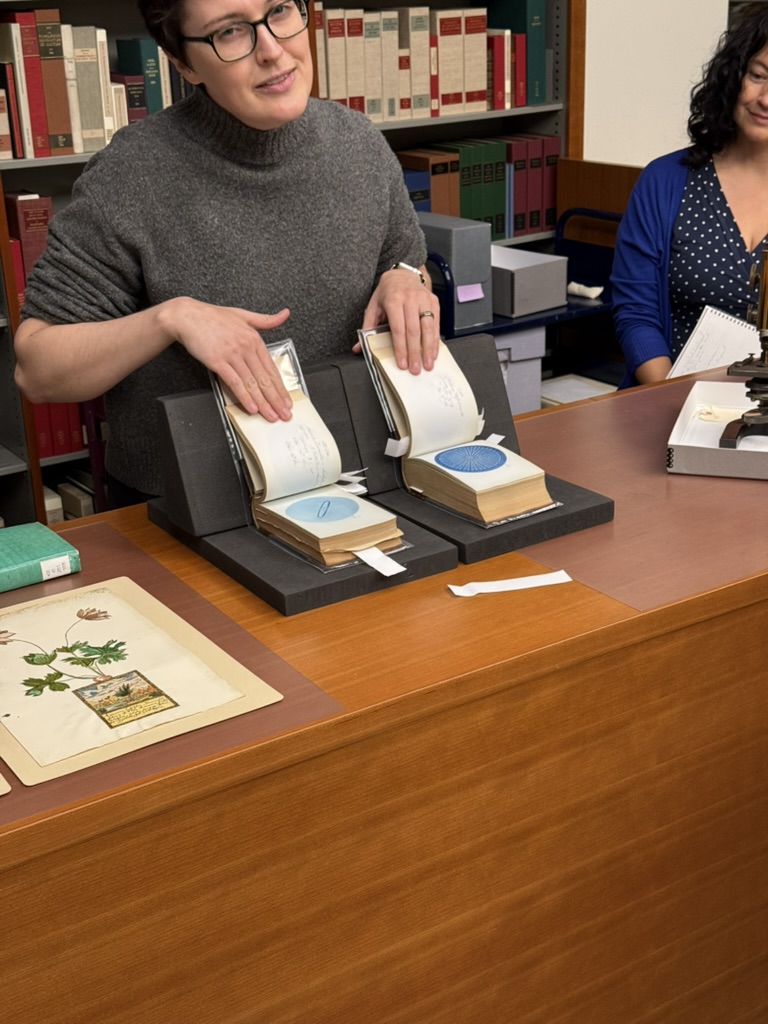
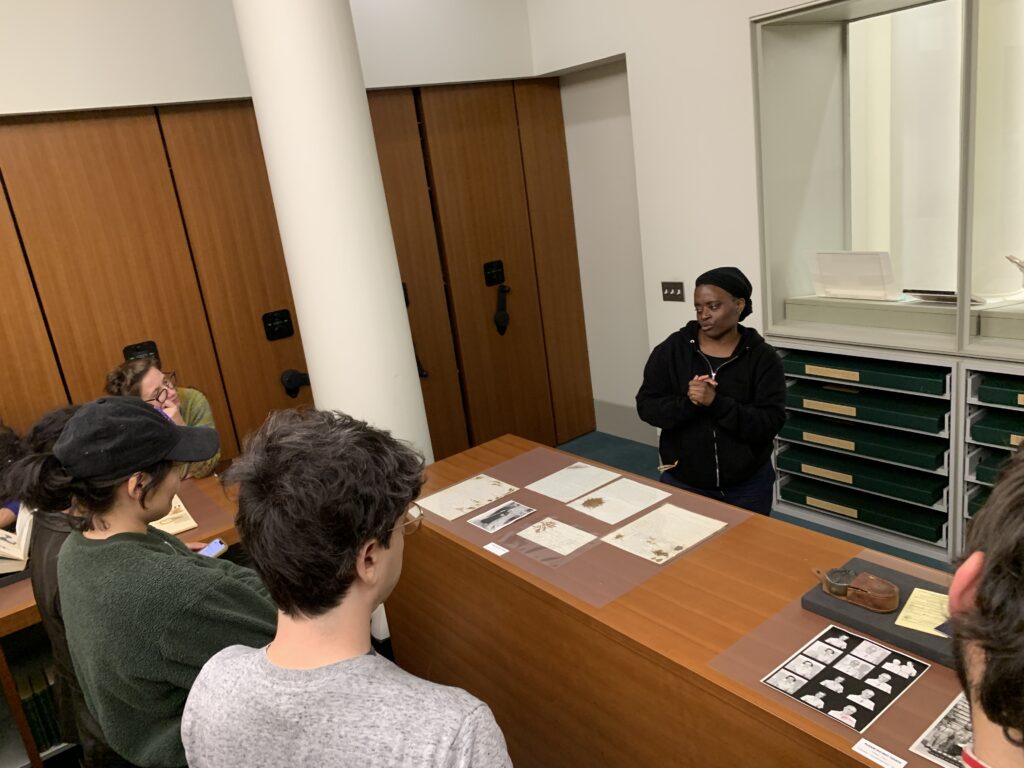
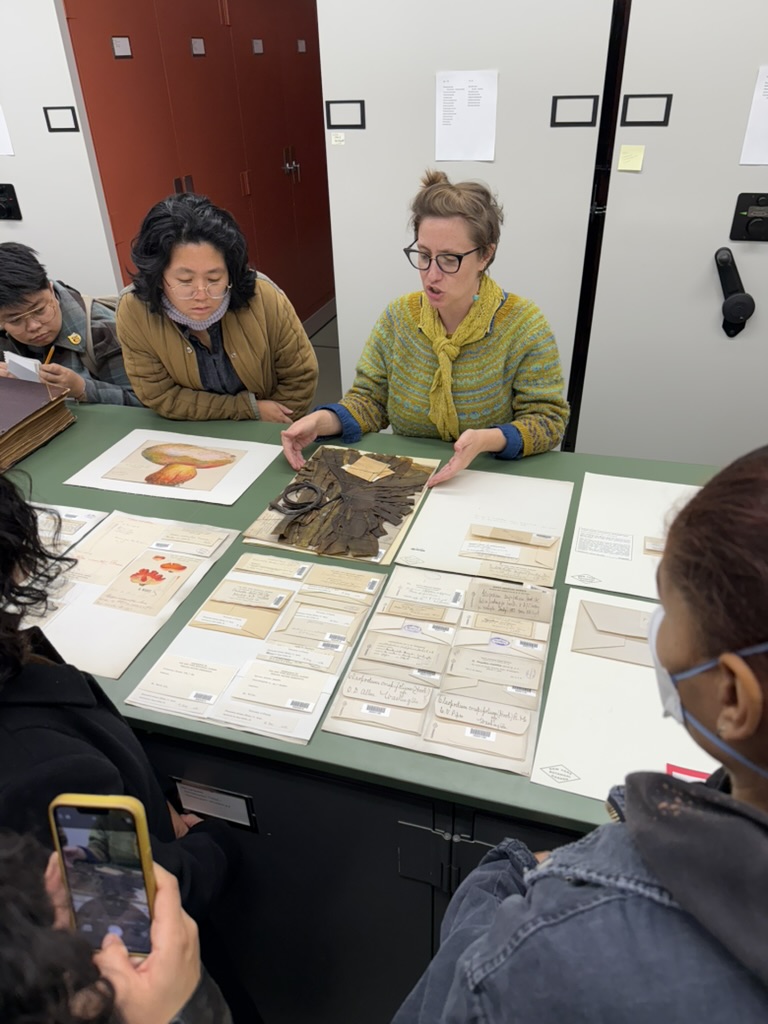
This week we’ll meet at the New York Botanical Garden at 4pm to trace slippery specimens across the library, archive, and herbarium with Rose Vincent and Catherine Stephens at Mertz Library; and Laura Briscoe, Assistant Director of the Herbarium (with a focus on Cryptogamic Collections). We’ll meet first in the library, on the 6th floor, then move over to the herbarium.
Travel
There’s a 3:22pm Metro North train out of Grand Central that will get us to the Botanical Garden by 3:44. Perhaps we could all meet by the central info booth in the Main Concourse — the big central hall — at 3:10, with our tickets already in hand? If you’re heading to NYBG on your own, you’ll enter via Mosholu Gate, where you’ll need to tell the guard you’re going to the library (which will exempt you from paying the entry fee!). Past the gate, you’ll turn left and walk northeast up Bronx Park Road to the library, the first big building on your right. We’ll start on the 6th floor.
Agenda
This week we’ll consider the herbarium as a particular “species” of collection, explore a range of specimens that defy easy classification and storage, consider the broader institutional and scientific manifestations of that misfit, and survey the range of misfit media formats and metadata schemes deployed to impose order on these wild beings.
Shannon’s Notes + NYBG Bibliography
To Prepare for This Week
- If you haven’t already met, please introduce yourself to the New York Botanical Garden. Take in the breadth of its garden collections, its library and herbarium collections, its various research projects, and its educational programs. If you’d like a bit more, check out this 27-minute PBS documentary (2013).
- Think about who does and doesn’t fit into the scientific canon: Watch Flora Litchtman and Sharon Shattuck, “The Animated Life of A. R. Wallace,” and read Natalie Proulx’s short framing text, at The New York Times (April 11, 2019).
- In the same vein, please meet another misfit naturalist taken by eccentric beings: Read Elaine Ayers, “Richard Spruce and the Trials of Victorian Bryology,” in The Public Domain Review (October 14, 2015). The Public Domain Review is worth knowing, if you’re not already familiar!
- Now, think with Elaine about how bryology might (imaginatively!) inform the basic operating principles of librarianship and archivy: Read Willa Köener’s interview with Elaine, “On Becoming Moss,” Are.na / Dark Properties (January 19, 2025) and explore the interactive project Elaine mentions in the interview, Thinking With Moss (Elaine Ayers, Ahmed Ansari, Tega Brain, Laura Briscoe, and Tiger Dingsun); note: TwM doesn’t seem to like Firefox. Are.na is another venue worth knowing!
- What tendrils might connect these botanical taxonomic conundrums with other realms of misfit? Read Patricia Ononiwu Kaishian, “In Praise of the Inherent Queerness of Nature,” LitHub (May 28, 2025), drawn from her new book: Forest Euphoria: The Abounding Queerness of Nature (Spigel & Grau, 2025).
- Optional: Thinking about plants through gender allows us to revisit some questions we posed a few weeks ago about what constitutes a “weed” or an “invasive” species? If you’d like to think more about this, check out Banu Subramanian, “Barbarians at the Gate,” Pioneer Works Broadcast (June 15, 2023). Broadcast is another great online publication worthy of your attention 🙂
- Finally, think about extending all of these questions to a field of collaborative, interdisciplinary experimentation. We’d love to hear from you about possible future partnerships at METRO’s new Library Field project, for which I aimed to sketch out some critical frameworks through a speculative syllabus. Please skim Shannon Mattern, “Library Field,” Syllabus Project (August 2024).
Fieldwork Documentation
Supplemental Resources
- Clive Aslet and Svante Helmbaek Tirén, Collecting Nature: A History of the Herbarium and Natural Specimens (Bokrörlaget Stolpe, 2022).
- Elaine Ayers, “Coded Colours: Botanical Histories of Colour Standardization,” THE SITE MAGAZINE (2019).
- Hongyu Chen, “The Scale of Moss,” Zomia Garden (Canadian Centre for Architecture, 2025).
- Harland Coultas, The Herbarium: Collecting, Arranging and Preserving Plants, Lichens, Mosses, and More – With Practical Instructions to Assist the Amateur Home Naturalist (Read Country Books, 2018).
- Maura Flannery, In the Herbarium: The Hidden World of Collecting and Preserving Plants (Yale University Press, 2023).
- Institute of Queer Ecology and their “The Earth Does (Not) Need Us” exhibition, Museum Schloss Moyland (June 2024 – January 2025).
- Robin Wall Kimmerer, “Ancient Green: Moss, Climate, and Deep Time,” Emergence Magazine (April 20, 2022).
- Robin Wall Kimmerer, Gathering Moss: A Natural and Cultural History of Mosses (Oregon State University Press, 2003).
- Daniel Park, “Addressing the Colonial Legacy of the World’s Scientific Botanical Collections,” Atlas Obscura (August 14, 2023).
- Clinton Crockett Peters, Pandora’s Garden: Kudzu, Cockroaches, and Other Misfits of Ecology (University of Georgia Press, 2018).
- “Queer Planet: A Celebration of Biodiversity,” Orion (Spring 2025).
- Londa Schiebinger and Claudia Swan, eds., Colonial Botany: Science, Commerce, and Politics in the Early Modern World (University of Pennsylvania Press, 2007).
- Barbara M. Thiers, Herbarium: The Quest to Preserve and Classify the World’s Plants (Timber Press, 2020).
- Kelly Wisecup, “Pauline Johnson’s Wild Flowers” in Assembled for Use: Indigenous Compilation and the Archives of Early Native American Literatures (Yale University Press, 2021): 95-8.
- Hallel Yadin, Interview with Maura C. Flannery, author of In the Herbarium: The Hidden World of Collecting and Preserving Plants (Yale University Press, 2023), New Books Network (November 14, 2023) [47:01].