
You Are Here: Self-Reference and Situated Knowledge
Location
We’ll meet at NYPL’s Stavros Niarchos Library Foundation, 5th Ave + 40th St, Room 604 (the conference room along 5th Ave — hang a left when you exit the elevator!) at 4pm!
Agenda
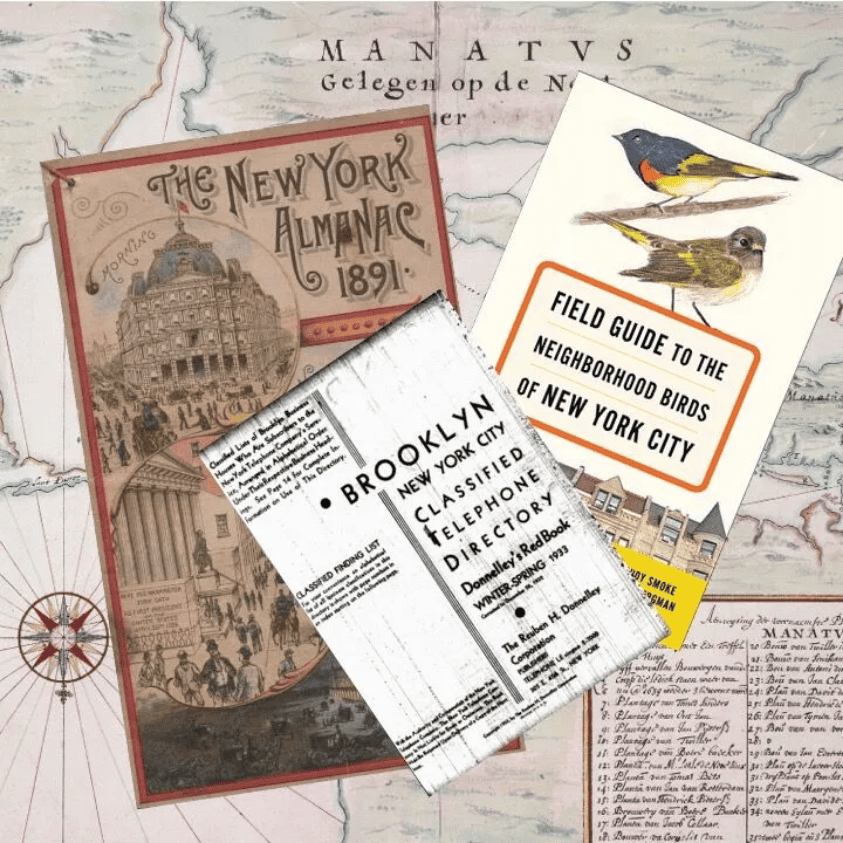
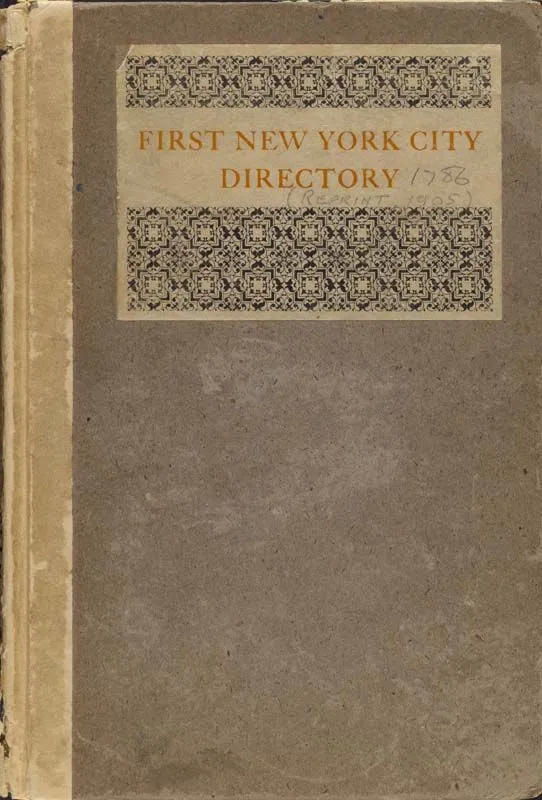
This week we’ll get to know one another a bit better and survey our different areas of interest and expertise through an exploration of bibliographic forms dedicated to search: reference books. What kind of epistemological activity or reading practice is “searching” — and what kinds of “discovery” do various genres of reference books make possible? We’ll consider the bibliographic, cultural, and epistemological pasts, presents, and futures of four reference formats — the dictionary, the almanac, the field guide, and the phone book — then apply that context in creating a détourned class directory.
To Prepare for This Week
- What’s up with the dictionary? Read Louis Menand, “” The New Yorker (December 22, 2025).
- Now, let’s the consider the almanac: Read Jess McHugh, “The Quiet Mysticism of Almanacs,” Los Angeles Review of Books (July 11, 2021) (a once-esteemed venue that’s currently going through some things!), then skim the New York State Library’s collection of almanacs, check out the Other Almanac, and read about its origin: Willa Köerner and Ana Ratner, “An Almanac of a Tender World,” Dark Properties (November 2, 2024).
- What about the field guide, which is one potential format for our final collaborative project? Read Shannon Mattern, “Cloud and Field,” Places Journal (August 2016), then skim the Philadelphia Local Media Field GuideI created with my students a couple years ago 🙂
- Now let’s consider the phone book: Read Paul Ford, “Rotary Dial,” f-train (August 21, 2012) [via the Wayback Machine], and Rob Horning, “Phone Books,” Internal Exile (January 11, 2025). Then check out the Internet Phone Book.
- You might also be interested in the NYPL’s Telephone Directories LibGuide, as well as the Library of Congress’s resources.
- Finally, let’s rethink the personal profile: “Rob Reiner Takes the Mel Brooks Questionnaire,” T: The New York Time Style Magazine (September 15, 2025).
- To prepare for our in-class activity, think about your most astonishing discovery of the week, what super-niche (and perhaps beautifully weird and “useless”) topic you’d be uniquely well qualified to represent as a reference librarian, and what you’re searching for right this very minute 😜
- I’m designing this week’s “class directory” exercise to be contemplative, collaborative, fun, and analog — but if, for any reason, you find handwriting difficult (my handwriting motor skills have definitely atrophied over the past decade!), I can provide a digital template; you’ll just need to bring a laptop or tablet to complete the exercise in class 😊
Today’s Slides
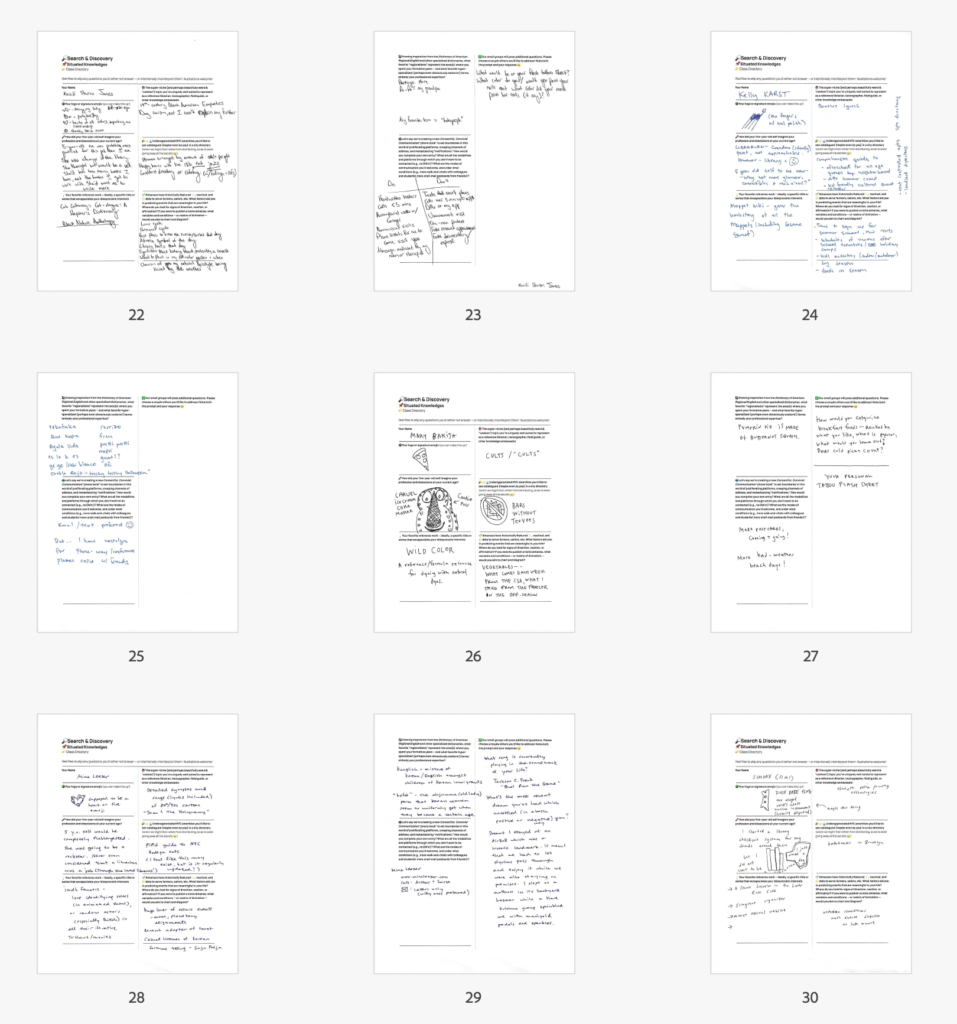
An Abstracted Sample of Our Class Directory
Supplemental Resources
- Stefan Fatsis, Unabridged: The Thrill of (and Threat to) the Modern Dictionary (Atlantic Monthly Press, 2025).
- Simon Garfield, All the Knowledge in the World: The Extraordinary History of the Encyclopedia (William Morrow, 2022).
- Alvin Hall, Driving the Green Book: A Road Trip Through the Living History of Black Resistance (HarperOne, 2023).
- Donna Haraway, “Situated Knowledges: The Science Question in Feminism and the Privilege of Partial Perspective,” Feminist Studies 14:3 (1988): 575-99.
- Jack Lynch, You Could Look It Up: The Reference Shelf from Ancient Babylon to Wikipedia (Bloomsbury, 2016).
- Jeff Nilsson, “The Book of Numbers: A History of the Telephone Book,” The Saturday Evening Post (February 20, 2010).
- Sarah Ogilvie, The Dictionary People: The Unsung Heroes Who Created the Oxford English Dictionary (Vintage, 2024).
- Ammon Shea, The Phone Book: The Curious History of the Book That Everyone Uses But No One Reads (Tarcher, 2010).
- Candacy Taylor, Overground Railroad: The Green Book and the Roots of Black Travel in America (Abrams Press, 2020).
- Diane Zabel and Lauren Reiter, eds., Envisioning the Future of Reference: Trends, Reflections, and Innovations (Bloomsbury, 2020).