
Foraging Across Field and File

Location
We’ll join LinYee Yuan of Field Meridians, Shelly Fank of Friends of Brower Park, and Alison Beshai of Resource Library at Brower Park in North Crown Heights. We’ll meet at Shirley Chisholm Circle at 4pm; the closet entrance is on Park Place and Kingston Ave.
Agenda
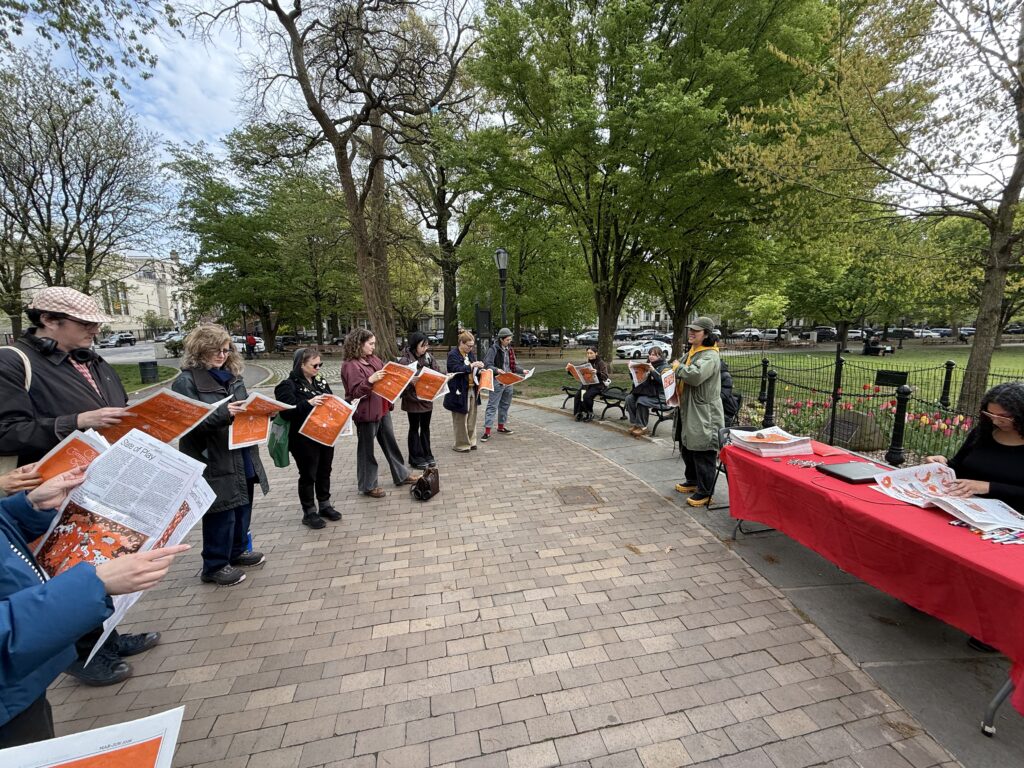
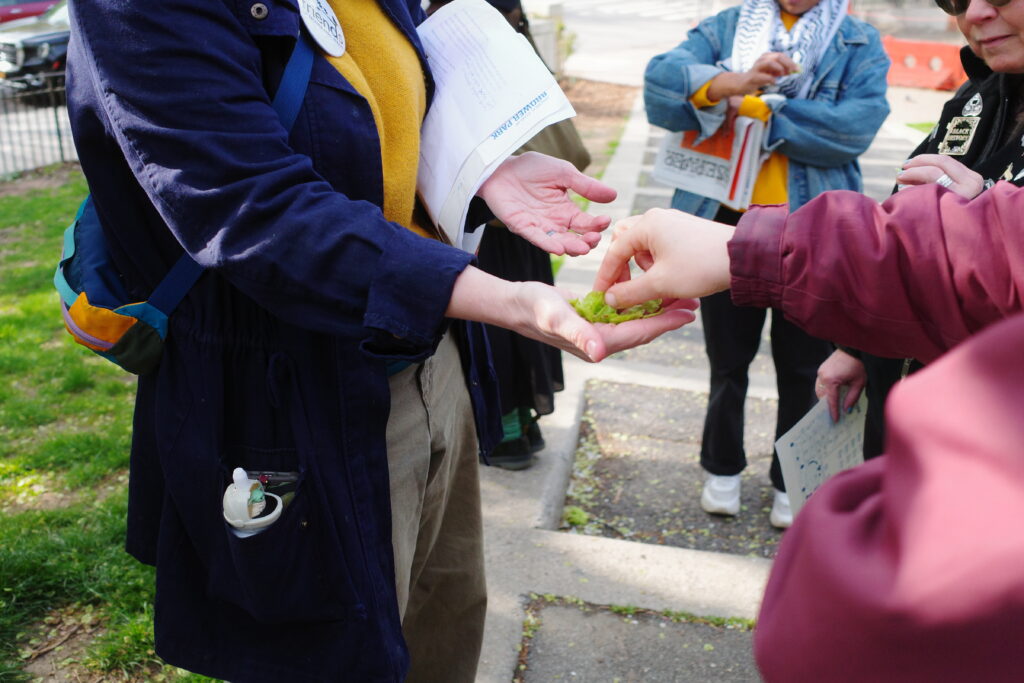
Today we’ll celebrate spring and Earth Day by exploring place-based pedagogy with Field Meridians, “an artist collective committed to creating tools for ecological resilience through social practice.” We’ll consider how foraging and gleaning — plus other modes of ecological observation and non-extractive collecting — can serve as both fieldwork practices and exploratory research methods. We’ll start the afternoon with an introduction by LinYee, then take a 30-minute tour of the edible canopy with Shelly, then engage in an Ecological Reciprocity workshop with Alison, then reflect with LinYee!
To Prepare for Today
(again, it’s a long list, but it’s a sampler of small bits 🙂):
- Introduce yourself to the Field Meridians collective (make sure to scroll allll the way down!) and its predecessor, MOLD magazine (which is now composting).
- Willa Köerner interviewed LinYee Yuan, FM’s executive director and MOLD’s editor, during these two phases of her practice. Read ”The Future of Food Is Relational,” Dark Properties (May 3, 2024) and “How Can We Seed New Worlds Together?” Dark Properties (June 16, 2025).
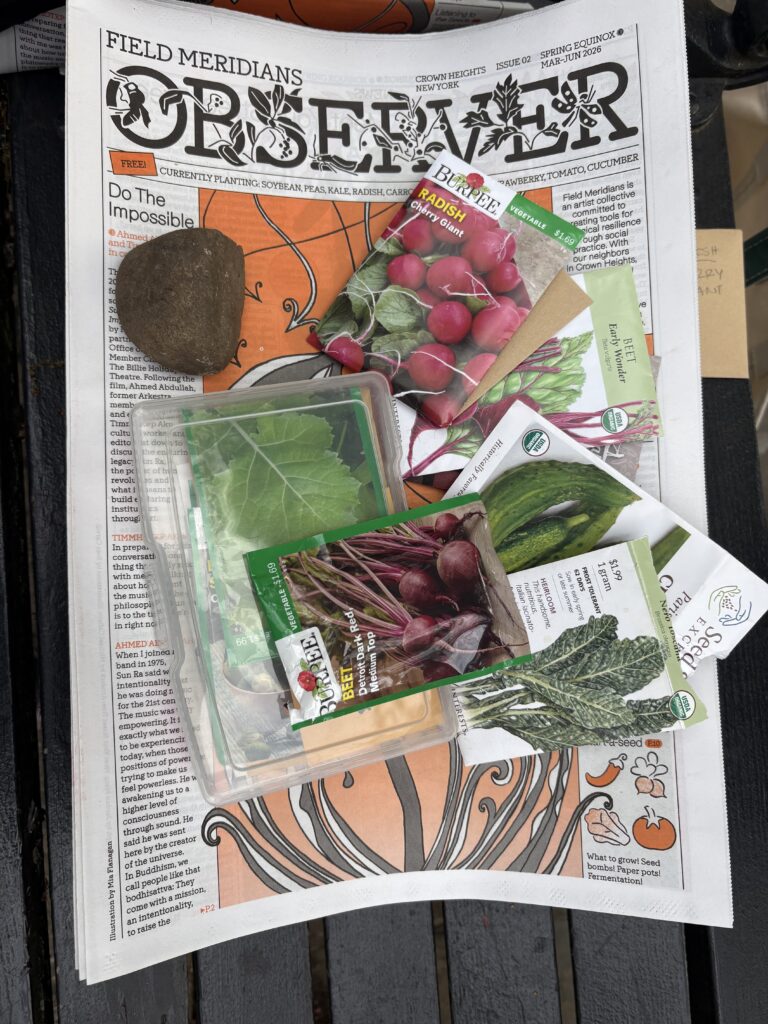
- Now, read about Field Meridians’ library collaborations in Sandra E. Garcia, “A ‘Nature School’ Meets in Brooklyn,” The New York Times (April 16, 2024) — and check out the Field Meridians Observer1 (December 2025-March 2026).
- Connecting Field Meridians’ core concerns — many of which it shares with METRO’s Library Field! — to some of the spatial ontologies we explored earlier this spring, let’s engage with an article from MOLD’s final issue that addresses the connections between food, foraging, land, and property: Read Juntinien Tribillon, “Usufruct: Cultivating a Return to the Commons,” MOLD 6 (March 28, 2025).
- Speaking of foraged fruit, this one’s for Xinan 🍊: Ching-in Chen, “Perfect Orange,” Poetry (July/August 2019).
- Now, let’s learn about a food commons in the Bronx: Read Sabina Sethi Unni, “A New Harvest,” Urban Omnibus (October 11, 2023).
- Let’s consider, too, how foraging is not only a field method, but also an intellectual and creative practice. I wasn’t able to find a single, accessible article that synthesizes relevant research across fields, so I encourage you instead to read the abstractsof the following publications from cognitive science, neurobiology, psychology, library and information science, and literary ecocriticism: Ketika Garg, Paul E. Smaldino, and Christopher T. Kello, “Evolution of Explorative and Exploitative Search Strategies in Collective Foraging,” Collective Intelligence (2024); Yuval Hart, et. al., “Creative Foraging: An Experimental Paradigm for Studying Exploration and Discovery,” PLoS One 12:8 (August 2017); Peter M. Todd and Thomas T. Hills, “Foraging in Mind,” Current Directions in Psychological Science 29:3 (2020); Pamela Effrein Sandstrom, “An Optimal Foraging Approach to Information Seeking and Use,” The Library Quarterly 64:4 (October 1994); and Timothy C. Barker, “Pagelarking: Beachcombing, Mudlarking, and Textuality,” Green Letters: Studies in Ecocriticism 27:4 (2023): 438-51.
- Consider: what architectures, furnishings, platforms, tools, programs, etc., would foster foraging in a library collection? Can archives accommodate foraging?
- Optional: Think about the value (or the necessity!) of foraging — and what can be foraged — in capitalist ruins: read this excerpt from Anna Tsing’s The Mushroom at the End of the World: On the Possibility of Life in Capitalist Ruins (Princeton University Press, 2021).
- Finally, skim through this Arena channel of artists engaging in or inspired by foraging and gleaning.
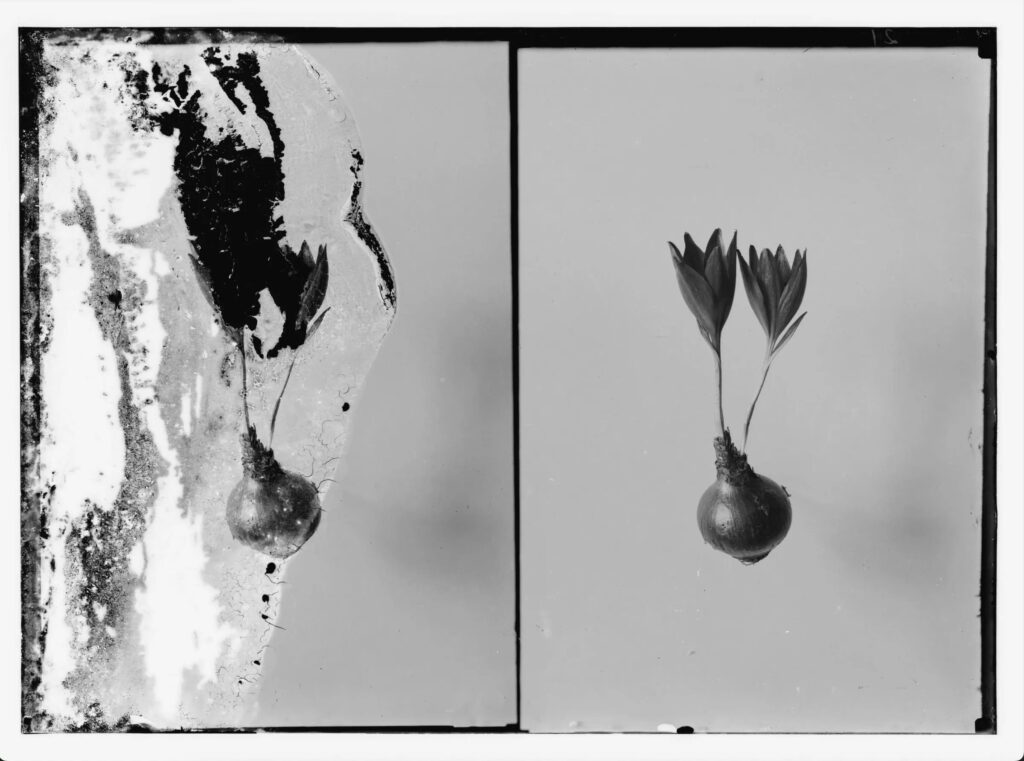
Fieldwork Documentation
Supplemental Resources
- Adam Amir, “Seasoning a Kid: A Search for a Practice of Place,” Emergence (October 2, 2025).
- ** Frederiek Bennema, “Foraging as an Artistic Counter Strategy,” FORUM+ 30:3 (October 2023).
- “Foraging Series for Teens | Fueling Ourselves with the Wild,” Greenpoint Library, June 25, 2025.
- Monica Gagliano, “Learning to Listen to Plants,” Emergence (January 9, 2026).
- Fuschia Hoover, “A Black Girl’s Guide to Foraging,” Atmos (December 18, 2020).
- “Information Foraging,” Wikipedia.
- Yen-Ting Kuan, On Foraging in Palestine, Japan & Maastricht(Limestone Books, 2025).
- Sarah Nicholls, Feral(2023).
- Jeremy Seifert and Benjamin James Roberts, “A Mystical Ornithology,” Emergence (October 16, 2025): film, 11:08.
- David W. Stephens, Joel S. Brown, and Ronald C. Ydenberg, eds., Foraging: Behavior and Ecology (University of Chicago Press, 2007).
- David W. Stephens and John R. Krebs, Foraging Theory (Princeton University Press, 1986).
- Anna Tsing, for the Matsutake Worlds Research Group, “Blasted Landscapes (and the Gentle Arts of Mushroom Picking” in Eben Kirksey, ed., Multispecies Salon (Duke University Press, 2014): 87-109.
- Wildman Steve Brill
- * “With LinYee Yuan,” Standard Hour (December 5, 2024).
- LinYee Yuan, “MOLD Is Divesting from the Internet,” MOLD (February 25, 2025).
- Hannah Ziegler, “Death Toll from California Wild Mushroom Poisoning Rises to Three,” The New York Times (January 10, 2026).