
Probing the Body
Location
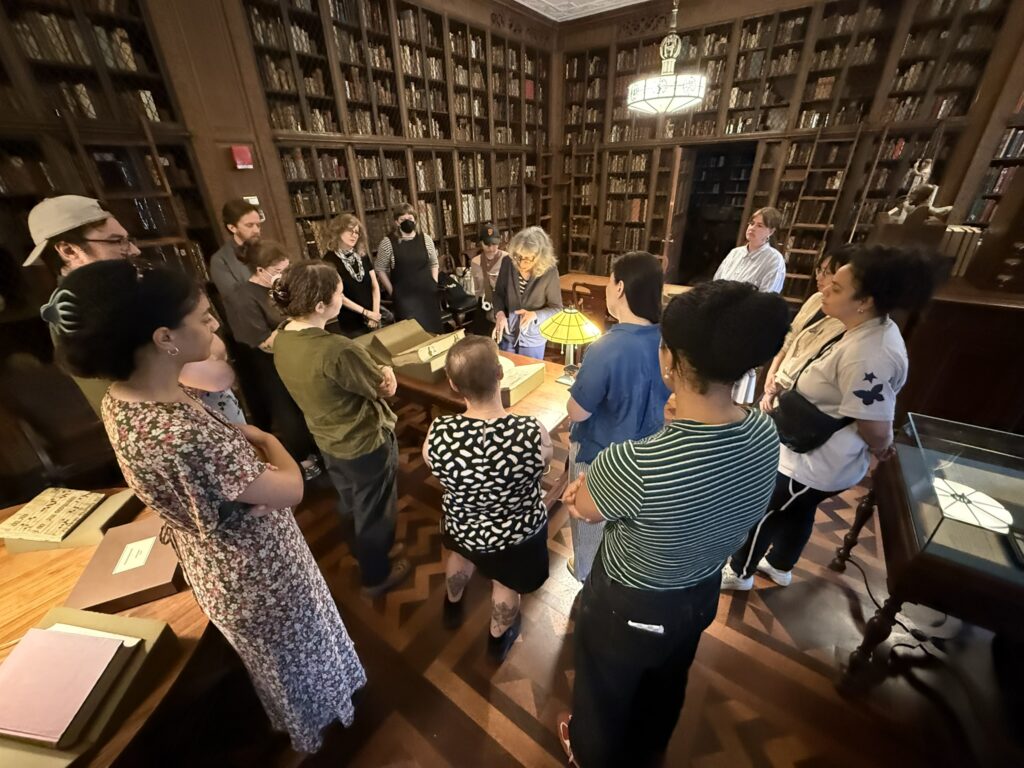
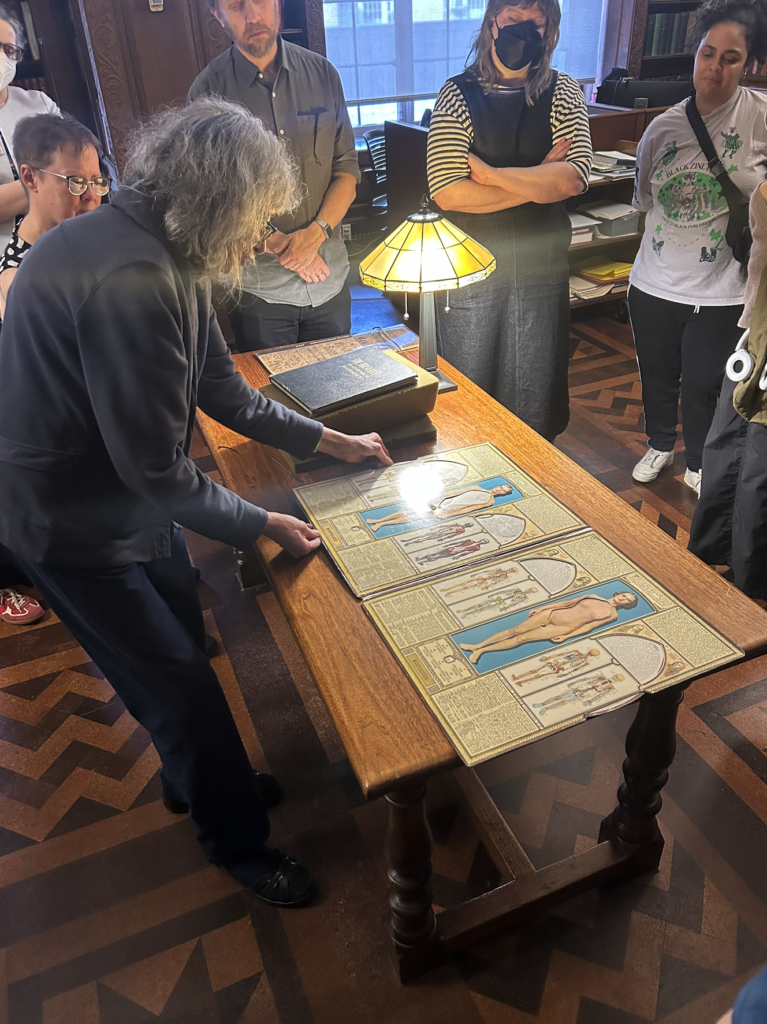
We’ll begin at 4pm at the New York Academy of Medicine (1216 5th Ave., @ 103rd St), where we’ll explore their historical collections with Arlene Shaner, Historical Collections Librarian; then we’ll trek a couple blocks south to the Gustave L. and Janet W. Levy Library at the Icahn School of Medicine at Mount Sinai, where we’ll meet with Associate Dean of Libraries and Information Sciences Kris Alpi and her colleagues.
Agenda
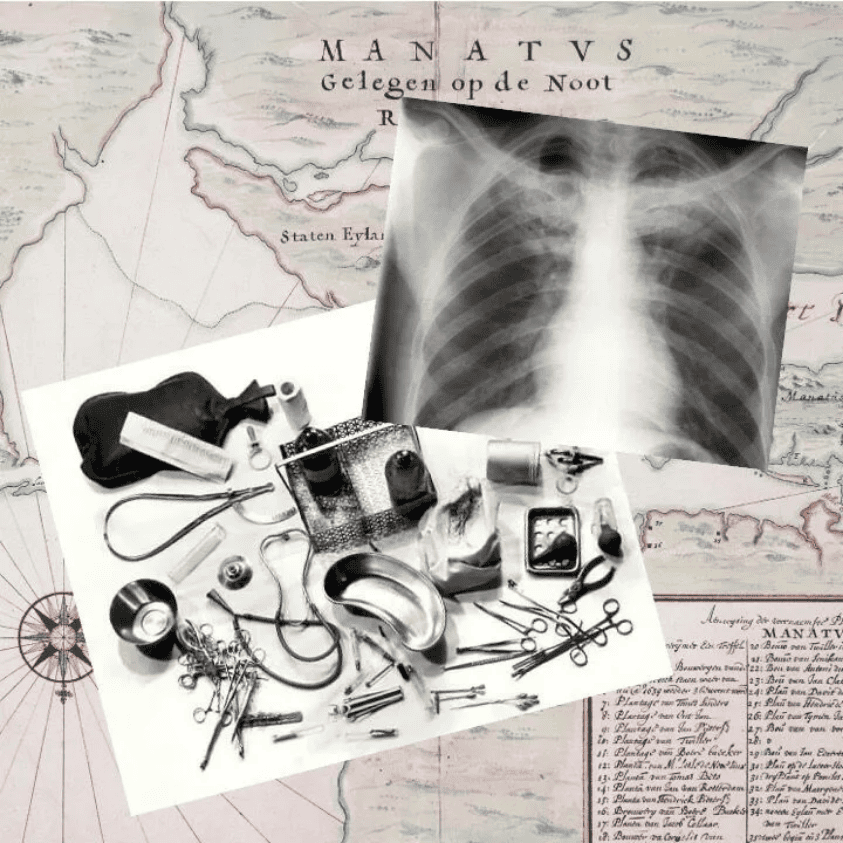
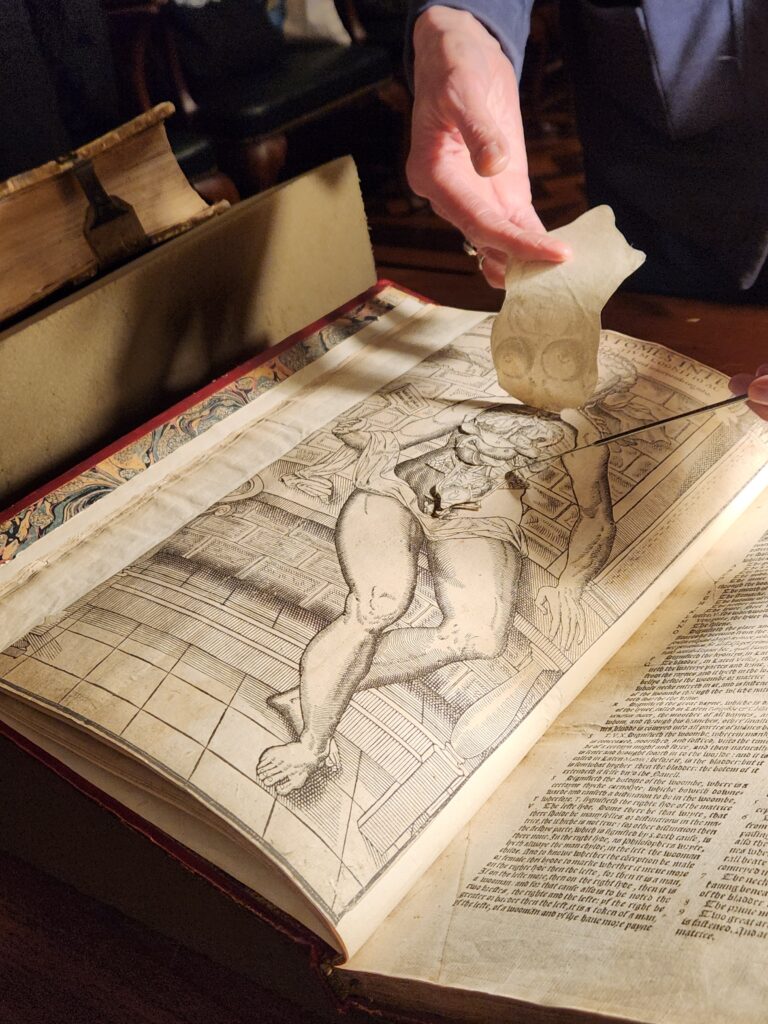
How does medical discovery happen in the laboratory, the clinic, and, particularly for our purposes, the library? We’ll survey corporeal modes of exploration, medical diagnostics, and tools for “searching” the body — both physiological and bibliographic. We’ll study historical modes of bodily exploration through NYAM’s special collections, consider the range of collections (bio-archives, historical medical devices, slide libraries, blood banks, patient databases, etc) pertinent to medical research, investigate how medical librarians and practitioners discover new knowledge, and observe what role the library plays within a contemporary medical institution. We can also consider how medical tools and methods (“invasive” and non-!) might apply in searching other kinds of collections and doing knowledge work in other fields.
To Prepare for This Week
- First, let’s think about the history of clinical methods. Listen to Adam Rodman, Internist at Beth Israel Deaconess Medical Center and assistant professor at Harvard Medical School, on the history of clinical reasoning in his podcast, Bedside Rounds Podcast 68 (July 24, 2022): 39:52.
- Consider, too, how clinical reasoning has been informed by the evolution of practices like dissection and anatomy and auscultation, protocols of classification, tools of observation like stethoscopes and x-rays and thermometers, forms of record-keeping, institutions like laboratories and hospitals and libraries, and so forth. Please skimH. Kenneth Walker, “The Origins of the History and Physical Examination,” Clinical Methods: The History, Physical, and Laboratory Examinations, 3rd ed. (1990). Think, too, about how these developments expand and transform the collection of medical knowledge artifacts. If you’re wondering how AI is shaping diagnosis, see Khullar in the Supplemental Resources below.
- How might researchers in the humanities and cultural heritage repurpose tools and techniques commonly used in medicine and the “hard” sciences? Read the abstracts of Daniel Vavřik, et. al., “The Use of Computed Tomography and X-Ray Fluorescence Analysis in the Research of Printed Book from the Seventeenth Century: Book Biding, Tomographic Reading of the Text, Dendrochronological Dating, Pigment Analysis,” Heritage Science 12 (2024) and Avery Blankenship, “Literary Forensics as Method; Chemical Analysis, Food Stains, and Readerly Encounters with Nineteenth-Century Cookbooks,” American Literature 97:3 (2025).
- Now, let’s consider how historical medical collections and hospital libraries serve medical professionals, researchers in other fields, and non-academic publics. Watch Melissa Grafe, John R. Bumstead Librarian for Medical History at the Yale School of Medicine, at the “Future of Historical Medical Libraries in the Digital Age” conference at the New York Academy of Medicine (October 18, 2024): 5:58 to 12:16; and listen to Michelle Kraft, Director of Library Services at the Cleveland Clinic, address “The Future of Medical Libraries: Evolving Roles in Research, Education, and Clinical Support” on the MedEd Podcast (October 30, 2024): stop at 4:31.
- Introduce yourself to the New York Academy of Medicine and its library, and explore their digital collections.
- Now, introduce yourself to Mount Sinai and the Icahn School of Medicine through its “recent scientific and medical breakthroughs” — and to its Levy Library. I also recommend watching the library’s orientation for new residents and fellows (June 6, 2024) to better understand how it aims to serve these medical practitioners (you’re welcome to skip 2:06 > 6:36, 8:02 > 9:37, and 10:01 > 11:01, and to stop at 12:03).
Fieldwork Documentation
Supplemental Resources
- Marc Berg and Geoffrey Bowker, “The Multiple Bodies of the Medical Record,” The Sociological Quarterly 38:3 (1997): 513-37.
- Alistair Black, “The Library as Clinic: A Foucauldian Interpretation of British Public Library Attitudes to Social and Physical Disease, ca. 1850-1950,” Libraries & Culture 40:3 (Summer 2005): 416-34.
- Thomas Neville Bonner, “The Laboratory Versus the Clinic” in Becoming a Physician: Medical Education in Great Britain, France, Germany, and the United States, 1750-1945 (Oxford University Press, 1996): 251-79.
- Geoffrey Bowker and Susan Leigh Star, Sorting Things Out: Classification and Its Consequences (MIT Press, 1999).
- Lisa Cartwright, Screening the Body: Tracing Medicine’s Visual Culture (University of Minnesota Press, 1995).
- Carol Cooper, The History of Medicine in Twelve Objects (Aurum, 2024).
- Michel Foucault, The Birth of the Clinic, trans. Alan Sheridan(Tavistock Publications, 1973); originally published in French in 1963.
- Fredrik Hanell and Sara Ahlryd, “Information Work of Hospital Librarians: Making the Invisible Visible,” Journal of Librarianship and Information Science 55:1 (2021).
- Shah Hussain, et. al., “Modern Diagnostic Imaging Technique Applications and Risk Factors in the Medical Field: A Review,” BioMed Research International (2022).
- Dhruv Khullar, “” The New Yorker (September 22, 2025).
- Steven Lehrer, Explorers of the Body: Dramatic Breakthroughs in Medicine from Ancient Times to Modern Science (Doubleday, 1979).
- Carolyn E. Liscomb, “The Library as Laboratory,” Bulletin of the Medical Library Association 89:1 (2001): 79-80.
- Ilana Löwy, “Labelled Bodies: Classification of Diseases and the Medical Way of Knowing,” History of Science 49:3 (2011).
- * Annemarie Mol, The Body Multiple: Ontology in Medical Practice (Duke University Press, 2002).
- Kathryn Montgomery, How Doctors Think: Clinical Judgment and the Practice of Medicine Oxford University Press, 20060.
- Trevor Owens, Keynote, “Then and Now: The Past and Future of Medical Libraries,” New York Academy of Medicine (October 18, 2022) [if you’re pressed for time, stop at 50:35].
- John V. Pickstone, Ways of Knowing: A New History of Science, Technology and Medicine (University of Chicago Press, 2000).
- “The Pioneers of Medical Imaging: The People Who Changed the Way We See Ourselves,” Open Med Science (November 8, 2025).
- Vanessa Rampton, Maria Böhmer, and Anita Winkler, “Medical Technologies Past and Present: How History Helps to Understand the Digital Era,” Journal of Medical Humanities 43 (2021): 343-64.
- Ruthann Richter, “The Stethoscope at 200,” Stanford Medicine (Fall 2016).
- Jonathan Sterne, “Mediate Auscultation, the Stethoscope, and the ‘Autopsy of the Living’: Medicine’s Acoustic Culture,” Journal of Medical Humanities 22 (2001): 115-36.
- Alice Street, “Artefacts of Not-Knowing: The Medical Record, the Diagnosis and the Production of Uncertainty in Papua New Guinean Biomedicine,” Social Studies of Science 41:6 (2011): 815-34.